
Ear Piercing in Gaziantep
Lobe, helix, tragus, conch and more - sterile, precisely placed ear piercing.
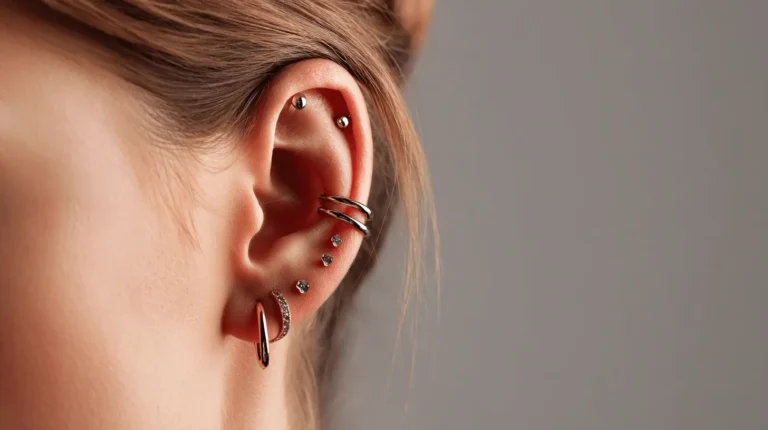
Ear piercing covers far more than the classic lobe: helix, tragus, conch, daith and other cartilage points each have their own placement considerations and healing timeline.
Lobe vs. Cartilage
Lobe piercings heal fastest (roughly 6-8 weeks) because the tissue has good blood flow. Cartilage points like helix, tragus and conch heal much more slowly - often 6-12 months - because cartilage has limited blood supply, and they're more sensitive to irritation during that time.
Combining Multiple Piercings
If you're planning several ear piercings together (a "curated ear"), we'll talk through spacing and jewelry choice so the combination looks intentional and heals cleanly.
We only use implant-grade titanium for first jewelry. See our full piercing services page for other options.
Lobe piercings heal in 6-8 weeks; cartilage points like helix or tragus take 6-12 months. Message us on WhatsApp to book.
You may also want to look at our Nose Piercing, Septum Piercing and Surface Piercing pages. All our piercing services are listed on the Piercing Services page.
How long does an ear piercing take to heal?
Earlobes need 6-8 weeks; cartilage placements such as helix, tragus and conch take 6-12 months.
The lobe is soft tissue with good blood supply, so it recovers quickly. Cartilage is different: it has minimal circulation, which is why helix, tragus, conch, daith and rook piercings routinely take six months to a year to heal fully.
That difference is the single most misunderstood thing about ear piercings. Many irritation problems come from treating a cartilage piercing as if it heals like a lobe - changing jewellery at eight weeks, for example, when the channel is nowhere near stable.
Can I get several ear piercings at once?
Sometimes, but stacking multiple cartilage points in one session makes healing considerably harder.
Every new piercing is a wound your body must manage. Several cartilage points at once increases swelling, and it also removes your options for sleeping - you need at least one side of your head that can rest on a pillow.
For a curated multi-piercing look, we plan the full composition first and then place it in stages, allowing each point to settle. The end result is the same; the healing experience is dramatically better.
How do I sleep with a new ear piercing?
Not on the pierced side. Constant pressure causes swelling and can angle the channel permanently.
Pressure during sleep is the leading cause of irritation bumps and crooked healing. If both ears are pierced, a travel pillow with a hollow centre lets you rest without contact.
Also keep hair, pillowcases and headphones clean, and avoid pulling clothing over the ear carelessly. Most cartilage healing problems are mechanical rather than infectious - they come from being knocked, pressed or caught, not from bacteria.
Ready to Book Ear Piercing in Gaziantep?
Reach out for a free consultation about your design and pricing.